Last updated November 18, 2026
Free written scope consultation - allowances, timeline, and change-order rules on paper before a single trade is scheduled
DIY vs Professional Bathroom Remodeling: What’s Safe to Do Yourself
Here’s a number that surprises most homeowners: a failed waterproofing job in a shower can cost $8,000 to $15,000 to tear out and redo once the damage reaches the subfloor and the framing behind it. That’s more than the entire labor bill you were trying to avoid. The real question in a bathroom remodel isn’t whether you’re handy enough to swing a hammer. It’s which tasks carry hidden liability that can void your homeowner’s insurance, fail a future inspection, or quietly rot your house from the inside out. This guide draws a hard line between the work that genuinely saves you money in Carrollton and the work that costs far more later.
Quick Answer
Painting, swapping hardware, installing a mirror, replacing a vanity top, and upgrading accessories are safe DIY projects in almost any bathroom. Anything that touches the water supply, drain lines, electrical circuits, or the waterproofing membrane behind tile should go to a licensed professional, and in Carrollton much of that work requires a permit and inspection regardless of who swings the hammer. The tasks that look easy and fail catastrophically are waterproofing, moving plumbing, and relocating electrical.
Styles & brands we work with
- Kitchen remodeling
- Bathroom remodeling
- Home additions & ADU
- Roofing
- Windows & doors
- Driveway & pavers
- Fence
Table of Contents
- The Hidden Liability Nobody Warns You About
- Which Tasks Legally Require a Licensed Plumber or Electrician in Texas
- How Carrollton Permit Rules Affect What You Can Do Yourself
- Where DIY Genuinely Makes Sense
- Why Waterproofing Is the Highest-Risk DIY Task in Any Bathroom
- The Cost Comparison That Accounts for Redo Risk
- How DIY Bathroom Work Affects Your Resale and Insurance
The Hidden Liability Nobody Warns You About
Most DIY advice focuses on skill. Can you cut tile? Can you sweat a copper joint? That framing misses the point. The real exposure in a bathroom remodel is legal and financial, and it shows up long after the last grout line is sealed.
Think about what happens at resale. A buyer’s inspector walks into your bathroom, sees a newly tiled shower with no visible permit record, and flags it. The buyer’s lender gets nervous. The appraisal stalls. Suddenly you’re negotiating against a repair credit that eats every dollar you saved on labor and then some. We’ve watched this play out in Carrollton more than once, especially in the older ranch homes near Downtown Carrollton where additions and remodels have stacked up over decades with no paper trail.
Insurance is the second shoe to drop. Most Texas homeowner policies exclude or limit coverage for water damage caused by “faulty workmanship.” If your DIY shower pan leaks and destroys the subfloor and the ceiling below, the adjuster will ask who did the work. If the answer is “I did,” you may be holding the bill yourself. That’s not a scare tactic. It’s how the standard HO-3 policy language reads.
The point isn’t that DIY is reckless. It’s that certain tasks in a bathroom are not really about skill at all. They’re about documented, inspected, insured work that protects your equity. The rest of this guide separates the two.
Which Tasks Legally Require a Licensed Plumber or Electrician in Texas
Texas doesn’t license general contractors statewide, but it absolutely regulates the trades that matter most in a bathroom. Plumbers and electricians must be licensed by the state, and municipalities like Carrollton enforce that licensing through the permit process. Doing regulated work yourself without a license isn’t just risky; it can be illegal, and it can void the warranty on your fixtures.
Here’s where the line sits:
- Plumbing: Any change to supply lines, drain lines, or venting requires a licensed plumber and a permit. That covers moving a toilet, relocating a sink, adding a shower valve, or converting a tub to a walk-in shower.
- Electrical: Adding a GFCI outlet, installing a heated floor, moving a light fixture, or adding a vent fan on a new circuit all require a licensed electrician and a permit.
- Gas: If your bathroom has a gas line for anything, leave it alone. Gas work is licensed, permitted, and dangerous to DIY.
What happens if you skip the license? In the short term, nothing, which is the trap. In the longer term, three things: the work fails inspection when you sell, your insurance denies a related claim, and any manufacturer warranty on the fixtures you installed is void. We’ve pulled permits in Carrollton for bathrooms where a previous owner had done unpermitted electrical, and the corrective work cost more than the original upgrade.
If your project expands beyond the bathroom into a larger scope, Home Additions & ADU in Carrollton walks through how the permitting and trade-licensing picture works on bigger structural work.
How Carrollton Permit Rules Affect What You Can Do Yourself
Carrollton enforces permit and inspection requirements through its Building Inspections division, and the rules are stricter than many homeowners expect. The core principle is simple: if the work requires a permit, it requires an inspection, regardless of who does it. You cannot legally self-inspect your way around the requirement.
Here’s what typically requires a permit in Carrollton:
- Any plumbing rough-in or relocation – supply, drain, or vent changes.
- Any electrical work beyond a like-for-like fixture swap – new circuits, GFCI additions, and heated floors.
- Structural changes – moving or removing a wall, enlarging a window, or changing a doorway.
- New waterproofing and tile in a wet area when it’s part of a permitted remodel – the membrane and shower pan get inspected before tile goes on.
- Any change that alters the building envelope – new windows, skylights, or vent hoods.
What doesn’t require a permit: paint, hardware, a freestanding vanity swap that doesn’t touch plumbing, a mirror, lighting that stays on the existing circuit, and accessories. Those are your safe zones, and we’ll cover them in the next section.
One Carrollton-specific wrinkle: many of the neighborhoods built in the 1970s and 1980s, particularly around Rosemeade and the streets off Josey Lane, have original cast-iron drain lines and galvanized supply lines. If you’re a homeowner doing cosmetic work in one of these homes and you open a wall, you may find a drain line that’s one repair away from a full replacement. Getting a permit upfront means an inspector catches it before you button it back up, which is a good thing.
Where DIY Genuinely Makes Sense
Let’s be clear about something most contractors won’t admit: plenty of bathroom work is genuinely worth doing yourself. If you’re organized and careful, these tasks save real money and don’t carry hidden liability.
- Painting. Walls, ceiling, and trim are fair game. In a bathroom, use a semi-gloss or eggshell finish rated for high humidity. Two coats of a quality bath-rated paint will outlast three of anything cheap.
- Hardware swaps. Faucet handles, towel bars, cabinet pulls, shower heads, and toilet seats are all homeowner-level projects. A shower head swap is one of the highest-value, lowest-risk upgrades in any bathroom.
- Mirror installation. A wall-mounted mirror is a controlled, low-stakes project as long as you know where the studs are and you’re not drilling into a concealed pipe or wire. Use a stud finder that also scans for metal and live wire.
- Accessory upgrades. Shelving, a new toilet paper holder, hooks, a freestanding linen cabinet, and a new bath mat can transform a bathroom’s feel on a Saturday afternoon.
- Regrouting and re-caulking. Removing failing caulk around a tub or shower and replacing it is a homeowner task. Choose a mold-resistant silicone designed for wet areas. This is one of the highest-value DIY moves in Carrollton because our summers push humidity high enough that caulk lines give out faster than in drier climates.
- Freestanding vanity swaps. If the plumbing stays in the same spot and stays disconnected only for the swap, most homeowners can replace a freestanding vanity. If you’re moving the drain, stop and call a plumber.
None of these require a permit in Carrollton. None of them void insurance or create resale problems. They’re the tasks where DIY is a straight win, and we say so because it’s true.
For projects that expand into exterior work, Driveway & Pavers in Carrollton and Fence Installation in Carrollton cover similar homeowner-level and contractor-level splits on outdoor projects.
Why Waterproofing Is the Highest-Risk DIY Task in Any Bathroom
This is the section that matters most. Waterproofing is the single highest-risk DIY task in any bathroom remodel, and it’s the one homeowners most often get wrong. The reason is simple: the failure is invisible until it’s catastrophic.
Behind your tile sits a waterproofing membrane, either a liquid-applied coating or a sheet membrane. Its job is to keep water out of the wall cavity and the subfloor. If it’s installed correctly, it lasts decades. If it’s installed with a gap, a thin spot, or a membrane that isn’t lapped properly at the corners, water gets behind it, sits in the wall cavity, and quietly rots the framing. Nobody notices for two or three years, and by then you’re looking at a full tear-out.
Here’s what makes it worse: tile hides everything. There’s no drip, no stain, and no smell until the damage is already severe. The homeowner who did the work sees a beautiful shower and assumes they nailed it. Two years later, a soft spot appears near the shower curb, and the next thing they know, they’re tearing out the entire assembly.
Common waterproofing failures we’ve repaired in Carrollton bathrooms:
- Missing or thin membrane at the shower curb – the most common leak path. Water wicks through the curb and rots the framing behind it.
- No pre-slope under a mud-bed shower pan – water pools under the tile and never drains.
- Nail or screw penetrations through the membrane – every penetrations is a leak waiting to happen.
- Membrane lapped in the wrong direction – water gets behind the lower sheet instead of running over it.
- Tile set before the membrane cured – the membrane never bonds properly.
None of these failures show up in the first year. That’s why waterproofing is the one task in a bathroom where we tell homeowners to stop. The skill ceiling isn’t the issue. The inspection and warranty that come with professional installation are what protect you.
The Cost Comparison That Accounts for Redo Risk
Most “DIY vs professional” comparisons lie because they only compare the labor line item. A realistic comparison has to include the expected cost of redo, and once you do, the numbers tell a different story than the internet makes it seem.
Here’s how a mid-range full bathroom remodel in the Carrollton market breaks down:
- Full professional remodel, mid-range fixtures: roughly $18,000 to $35,000 depending on size, layout changes, and finish level.
- DIY labor-savings on a full remodel: typically $6,000 to $12,000 in avoided labor, offset by higher material costs, tool purchases, and longer timeline.
- Cost to redo a failed DIY shower waterproofing: $8,000 to $15,000 including tear-out, re-framing, and re-tile.
- Cost to bring unpermitted DIY work up to code before resale: $3,000 to $12,000 depending on what’s uncovered.
- Cost of a denied insurance claim on water damage from faulty DIY work: full repair out of pocket, often $10,000 or more.
- Discount a buyer will negotiate off your price for unpermitted work: 2% to 5% of home value in most Carrollton transactions we’ve seen.
Run the math on a $400,000 Carrollton home. A 3% resale discount from unpermitted bathroom work is $12,000. That’s roughly equal to the entire labor savings of doing the remodel yourself, and you gave up the warranty, the inspection record, and the insurance coverage to get there.
For projects in the $30,000 to $50,000 range, the math tilts further toward professional work. Groundwork Construction Co. of Carrollton pairs upfront pricing with 0% financing for 18 months and $1,000 off projects over $10,000, which closes a lot of the cash-flow gap that pushes homeowners toward DIY in the first place.
How DIY Bathroom Work Affects Your Resale and Insurance
We’ll give you the unvarnished version, because it’s the part that most DIY guides skip.
When you sell a home in Carrollton, the buyer’s inspector is not looking for reasons to fail you. They’re looking for unpermitted work, water damage, and code violations. Bathrooms are the highest-risk room in the house because plumbing and electrical concentrate there. If your DIY remodel is documented with permits and inspections, the appraisal and sale go smoothly. If it isn’t, expect a repair credit negotiation at best and a failed sale at worst.
Insurance is the second front. After any water damage claim, the adjuster’s first question is who did the work and whether it was permitted. If the work was unpermitted DIY, most policies will exclude or limit the payout under the faulty workmanship clause. We’ve heard from homeowners who assumed “my insurance will cover it if it leaks” and discovered, after a $14,000 repair, that it didn’t.
The upside is that documented, permitted professional work doesn’t have this problem. It protects your equity, it travels with the home at sale, and it’s insurable. That’s the real value proposition of professional remodeling, and it’s what the 730-Day Done Right Promise is designed to backstop. If something fails within the coverage window, we make it right. That’s as close to a no-lose position as a homeowner can get.
Common Mistakes to Avoid
- Skipping the permit to “save time.” A permit in Carrollton takes a few extra weeks and protects your equity. Skipping it costs far more at resale than it ever saves upfront.
- Setting tile over an uncured or undercured membrane. That’s a guaranteed redo, and it won’t show up until the second year.
- Using standard drywall in a wet area. The bathroom behind the shower needs cement board or a proper substrate. Standard drywall wicks moisture and fails.
- Moving plumbing without a plumber. Sweating a joint looks easy on video. Doing it on a live supply line in an older Carrollton home with galvanized pipe is a different story. If the joint fails, it fails inside a wall.
- Not pulling the original valve when replacing a faucet. In homes built before the 1990s around Downtown Carrollton, we regularly find valves that are one turn away from failing. Replace the valve while the wall is open, not after the wall is closed.
- Buying tile before you know your layout dimensions. A tile job with a bad layout looks worse than a bad tile job with a good layout. Plan the layout first, then buy the material.
- Skipping GFCI protection. Every bathroom outlet needs GFCI protection in Texas, and that’s a permit-level electrical change. Don’t skip it.
See the difference
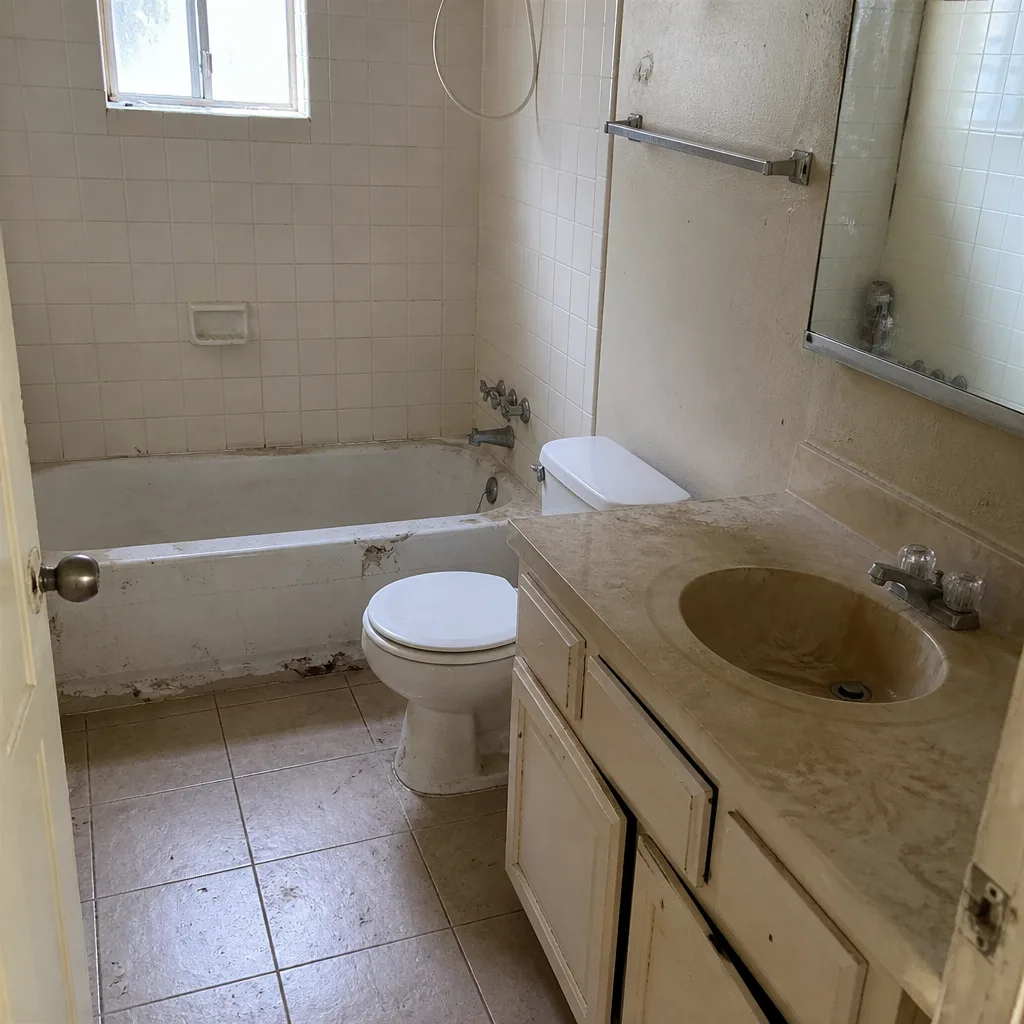 Before
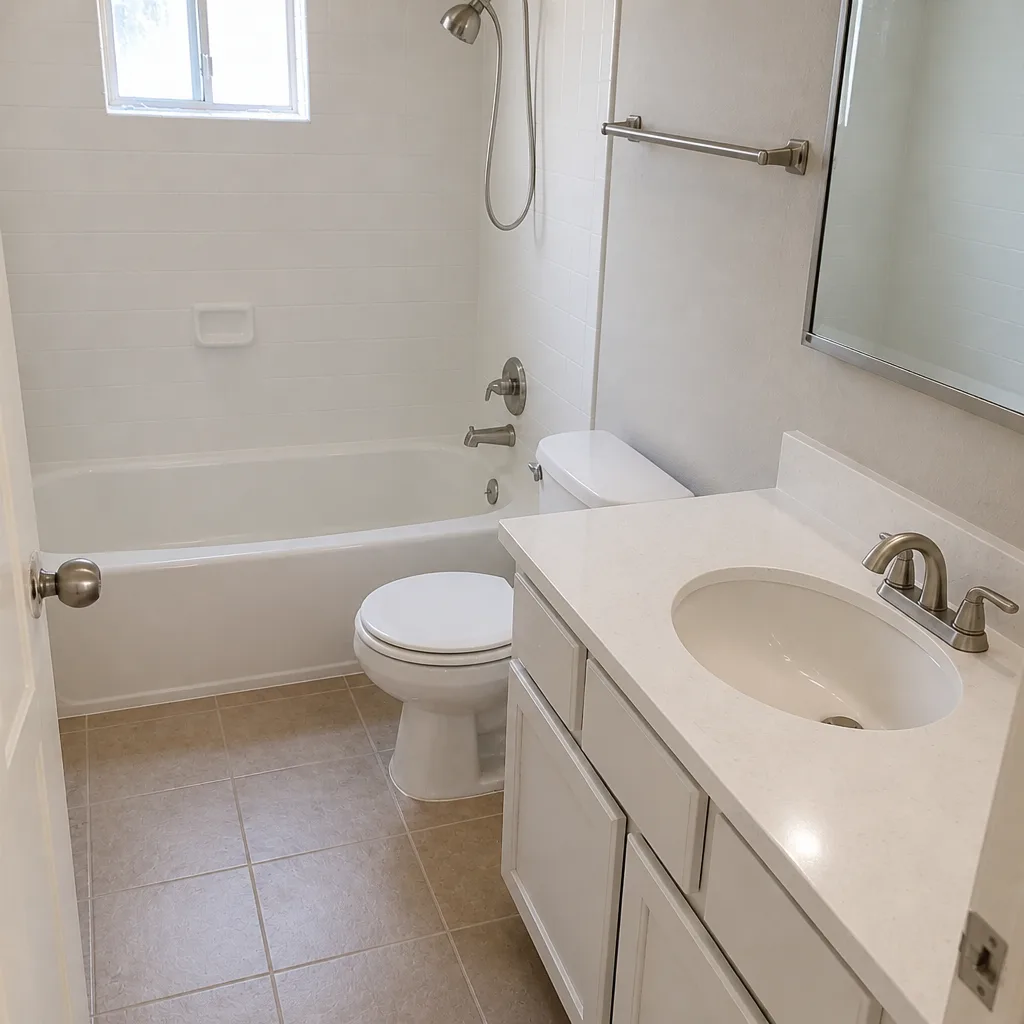 After
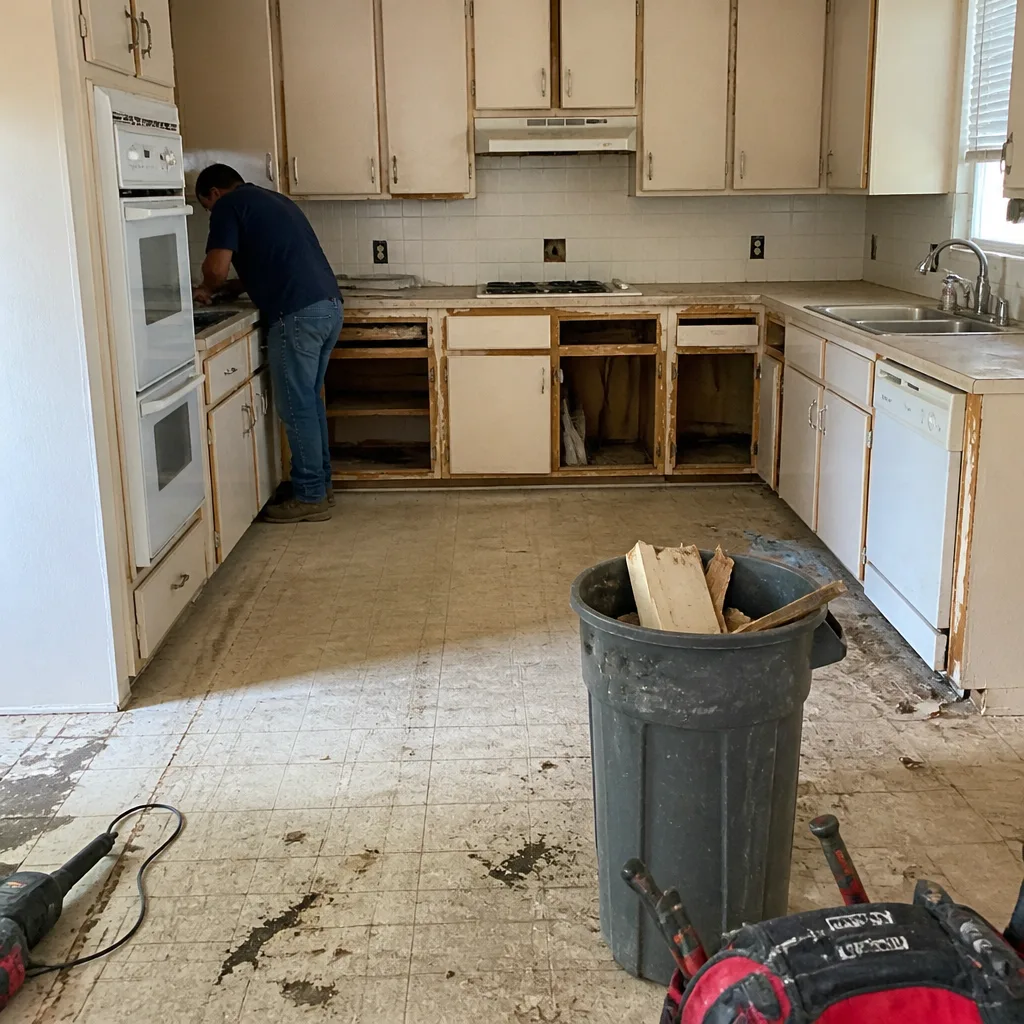 Before
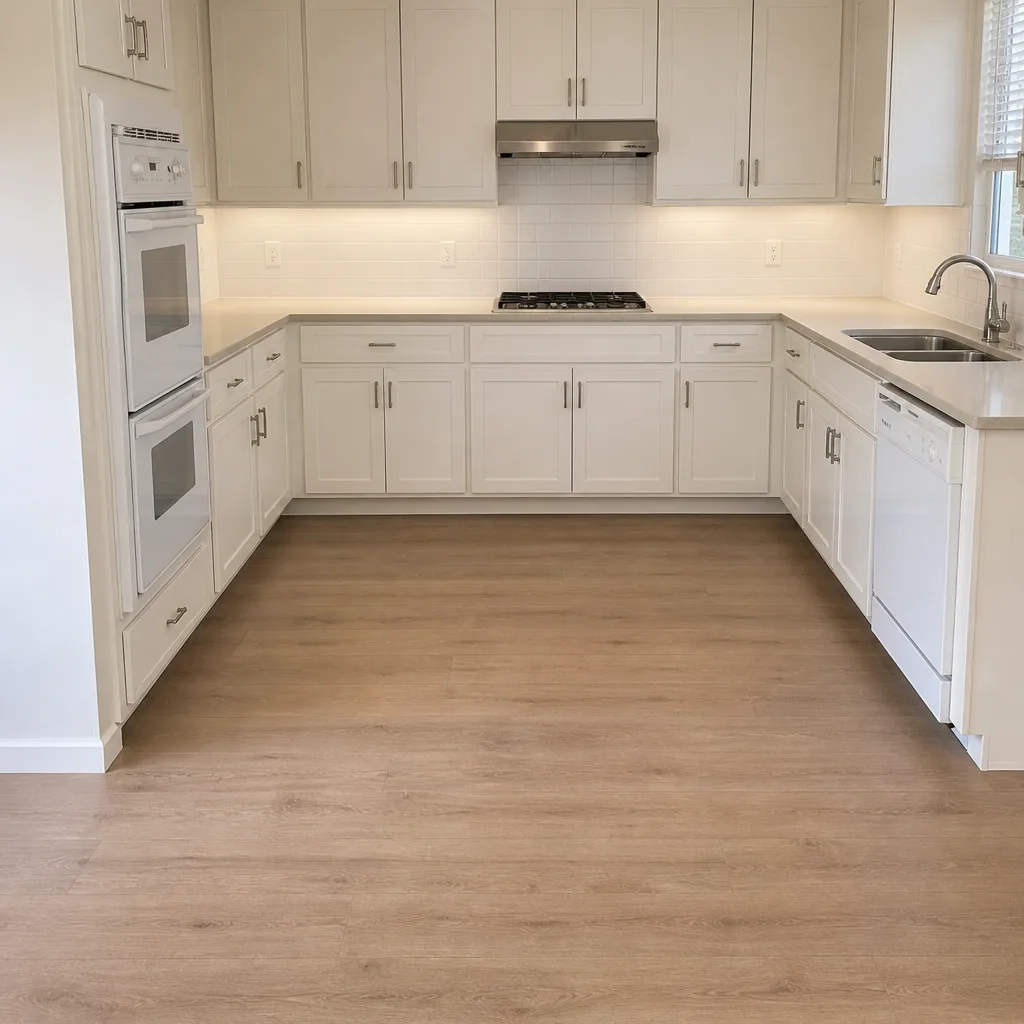 After
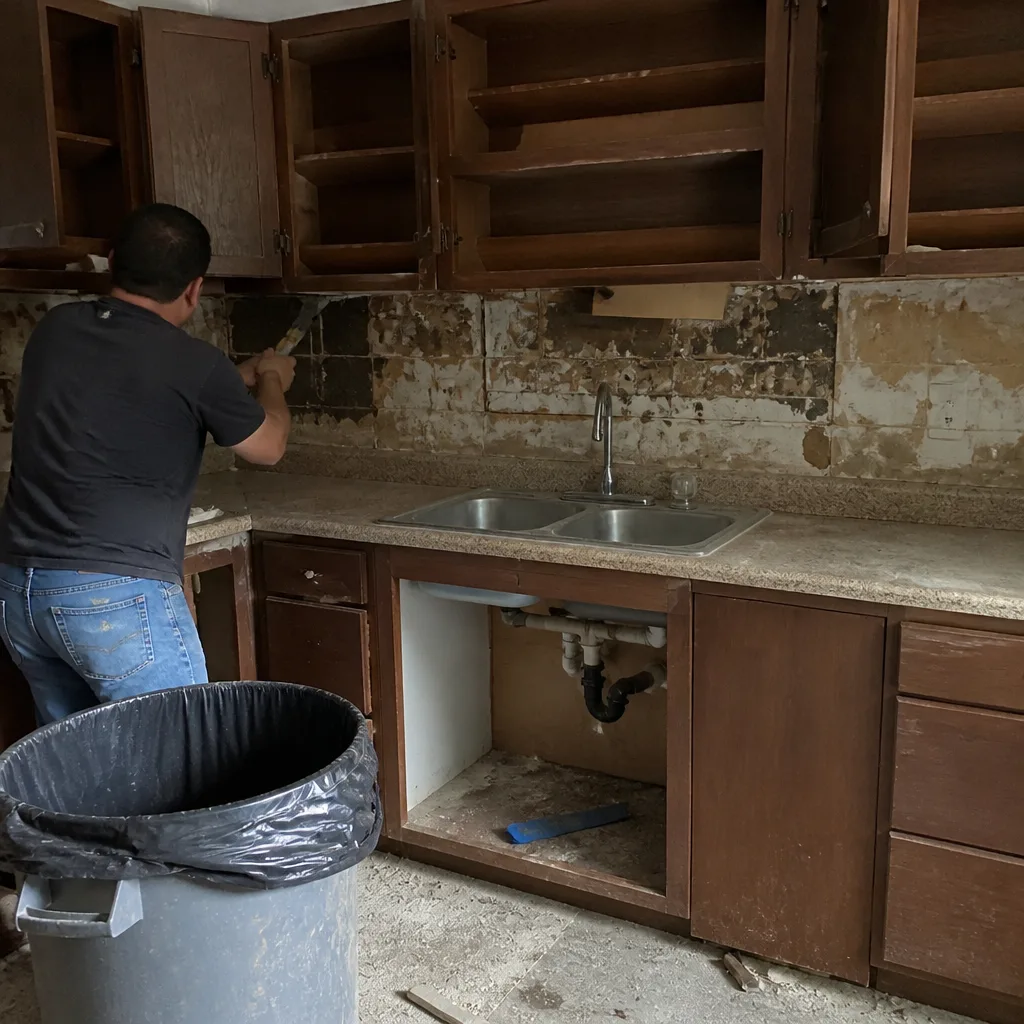 Before
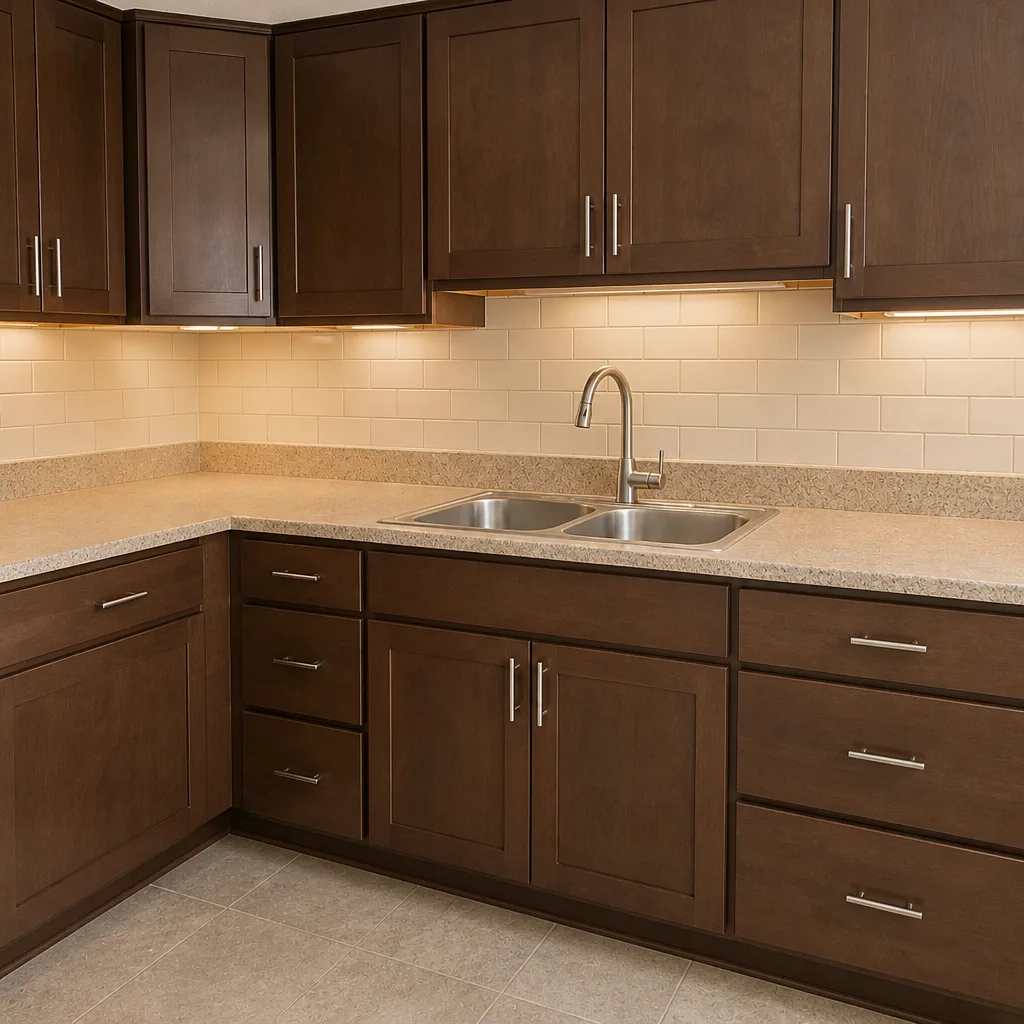 After
When to Call a Professional
Call a professional the moment your project touches plumbing lines, electrical circuits, structural changes, gas, or waterproofing. That’s the hard line, and it’s not up for negotiation in Carrollton because the city will inspect it either way. Also call us if you’re doing a full remodel where the walls are open. The value of professional work in that moment isn’t just the trade labor; it’s the inspection record, the warranty, the design consultation that prevents layout mistakes, and the fact that you’re not the one holding the leak risk for the next decade.
Groundwork Construction Co. of Carrollton offers free estimates in Carrollton. Call (844) 560-0925 to schedule yours. Our technicians have up to 12 years of experience, arrive in uniform, and are background-checked on every job.
Frequently Asked Questions
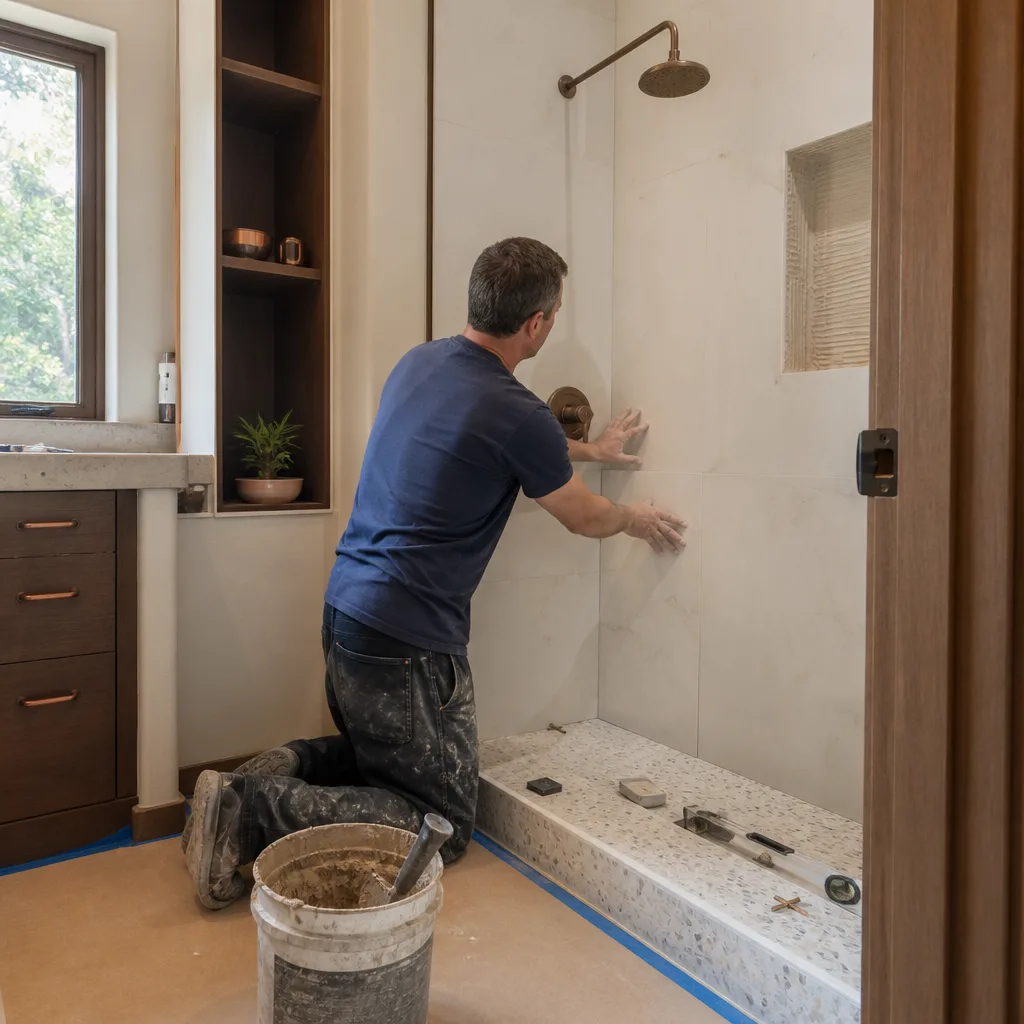
You can legally do cosmetic work in your own bathroom, including painting, hardware swaps, accessory installs, and a like-for-like vanity replacement. Any work that touches plumbing, electrical, gas, or structure requires a licensed trade and a permit through Carrollton’s Building Inspections division, and that permit requires an inspection regardless of who does the work.
Painting, hardware swaps, mirror installation, accessory upgrades, re-caulking, and a freestanding vanity swap with no plumbing relocation are all safe homeowner projects. These tasks don’t require permits in Carrollton, don’t carry insurance risk, and don’t create resale problems. Everything else touches a licensed trade, waterproofing, or structure.
Three things: the work fails inspection at resale, your insurance may exclude related water damage claims under the faulty workmanship clause, and any manufacturer warranty on the products you installed is void. Expect a repair credit negotiation or a discounted offer price when you sell, typically 2% to 5% of home value.
Yes. Waterproofing is the highest-risk DIY task in any bathroom because the failure is invisible. Water gets behind the membrane and rots the framing for two or three years before you notice anything. A failed shower waterproofing repair typically costs $8,000 to $15,000 to tear out and redo, which is more than the entire labor savings of doing the remodel yourself.
A mid-range full bathroom remodel in the Carrollton market runs roughly $18,000 to $35,000 depending on size, layout changes, and finish level. Call (844) 560-0925 for a free estimate with line-item pricing. Estimates are free, and there’s no pressure to move forward.
Yes. Permits are pulled on every bathroom remodel that requires them, and the work is inspected before it’s signed off. That’s part of what the 730-Day Done Right Promise backs up. You end up with a documented, insurable remodel that doesn’t create resale headaches.
The Bottom Line
DIY is worth doing in a bathroom, but only for the specific tasks that don’t carry hidden liability. Paint, hardware, mirrors, accessories, and re-caulking are all fair game. Everything that touches plumbing, electrical, structure, or waterproofing belongs with a licensed professional. The math on that line isn’t close: redo risk, insurance exposure, and resale discounts turn most DIY labor savings into a net loss. If you’re planning a bathroom remodel in Carrollton and you’re not sure which side of the line your project sits on, get a free estimate before you start buying materials. Call Groundwork Construction Co. of Carrollton at (844) 560-0925 to schedule your free estimate, and start from Groundwork Construction Co. of Carrollton home if you want to see the full scope of what we do from foundation to finish line.
Written by the team at Groundwork Construction Co. of Carrollton.