Last updated November 18, 2026

Free written scope consultation - allowances, timeline, and change-order rules on paper before a single trade is scheduled
DIY vs Professional Driveway & Pavers: What’s Safe to Do Yourself
Laying pavers on a Saturday afternoon is achievable. Getting the base compaction right without a plate compactor and a moisture meter is not – and that’s the part that determines whether your driveway lasts 5 years or 25. Here’s the counterintuitive truth we’ve learned after years of tearing out failed DIY driveways across Carrollton: the pavers themselves are almost never the problem. The failure is always underneath them. In this guide, we’ll separate the driveway work you can genuinely handle yourself from the work that voids material warranties, fails city inspection, or creates drainage problems that cost more to fix than hiring a pro from the start.
Quick Answer
Cleaning, re-sanding joints, and re-leveling a few edge pavers are genuinely safe for most homeowners to do themselves. Base excavation, grading, compaction, and full paver installation are not – those steps need a plate compactor, a moisture meter, and the know-how to hit proper compaction density, and getting them wrong is the number one reason DIY driveways fail early. For anything involving the base or drainage, hire a professional.
Styles & brands we work with
- Kitchen remodeling
- Bathroom remodeling
- Home additions & ADU
- Roofing
- Windows & doors
- Driveway & pavers
- Fence
Table of Contents
- The Real Line Between Safe DIY and Dangerous DIY
- The Paver Tasks That Are Genuinely DIY-Safe
- Why Base Excavation and Compaction Is the Line You Shouldn’t Cross
- What a Real Paver Installation Requires (and What It Costs to Rent)
- How Unpermitted DIY Installs Affect Insurance and Resale in Texas
- The Hybrid Approach: What to Prep Yourself to Cut Labor Costs
- Carrollton-Specific Factors: Soil, Drainage, and HOA Rules
- Common Mistakes to Avoid
- When to Call a Professional
The Real Line Between Safe DIY and Dangerous DIY
Most homeowners frame the driveway decision as a simple skill question: can I do this or can’t I? That’s the wrong frame. The smarter question is what specifically can you do without voiding your material warranties, failing a city inspection, or creating a drainage problem that quietly wrecks your foundation over the next decade.
When we walk a driveway in Carrollton that’s failing after three or four years, the diagnosis is almost always the same. The pavers are perfectly fine. The base underneath them settled, shifted, or was never compacted to the right density in the first place. And that’s the part no homeowner can eyeball. A poorly compacted base looks solid on day one and starts heaving or rutting by the second or third freeze-thaw cycle.
So we draw a practical line. On the safe side: cleaning, re-sanding joints, pulling and resetting an edge paver or two, and pressure washing. On the other side: excavation, grading for slope, base compaction, cutting pavers, laying full courses, and anything that touches how water moves off your property. The safe tasks protect your investment. The risky tasks are where DIY driveways go wrong.
There’s a warranty dimension too. Paver manufacturers typically tie their product warranty to proper installation, and many specify a compacted base to a defined density. Break that chain with a DIY base and the warranty doesn’t evaporate on the pavers themselves – it disappears exactly when you need it, when a paver cracks or a joint fails because the ground beneath it moved.
The Paver Tasks That Are Genuinely DIY-Safe
We don’t want to talk you out of every bit of hands-on work. A well-built driveway still needs maintenance, and there are real jobs you can own. These are the tasks where a homeowner with basic tools and some patience does no harm and saves real money over time.
1. Cleaning pavers. Regular sweeping and a seasonal pressure wash remove the dirt, pollen, and organic debris that stain joint sand and grow mildew in shaded spots. Keep the pressure moderate and the nozzle moving so you don’t blast out joint sand or pit the surface of softer pavers.
2. Re-sanding joints. Joint sand works its way out over a season or two, especially on a driveway taking tire traffic. Topping up polymeric sand is a legitimate DIY task. Sweep it into the joints, tamp it down, wet it per the manufacturer’s instructions, and let it cure. This is the single best thing you can do to keep weeds out and pavers locked tight.
3. Re-leveling an edge paver or two. A paver at the driveway apron or along a border that’s rocked up slightly can be pulled, the bedding re-set, and tapped back into place. Keep the fix local. When pavers in the middle of the field are heaving, that’s a base problem, not an edge-paver problem, and it needs a professional diagnosis.
4. Sealing. Once a driveway is fully cured and swept clean, applying a quality paver sealer is manageable for a careful homeowner, though it’s easy to get uneven color if you rush it. Follow the product’s coverage rate and don’t apply in direct sun or heat.
What all four of these have in common: they protect or maintain an already-correct installation. None of them create the base. That distinction is the whole game.
Why Base Excavation and Compaction Is the Line You Shouldn’t Cross
Here’s the part that separates a 25-year driveway from a 5-year one, and it happens before a single paver goes down. The base is everything.
A proper paver driveway starts with excavation to the right depth – typically 8 to 12 inches total once you account for the compacted base, the bedding sand, and the paver thickness. Then that base aggregate gets laid in lifts and compacted in stages, with moisture added along the way so it actually reaches proper density rather than just looking packed. That’s where the moisture meter and the plate compactor come in. Too dry and the base won’t consolidate. Too wet and it turns to mush that never achieves density. The window where it’s right is narrow, and you can’t see it with your eyes.
What goes wrong when the base is off? The symptoms show up slowly, then all at once:
- Rutting and settlement under the tire path, because the base was loose and traffic compresses it over time.
- Heaving and rocking pavers as the Texas clay beneath the base swells and shrinks through wet and dry seasons.
- Ponding water where slope wasn’t graded correctly, which then softens the base and speeds up every other problem.
- Weeds and joint failure as the base shifts and opens gaps the joint sand can’t fill.
- Edge creep, where pavers walk out of line because the edge restraint wasn’t set into a compacted, stable edge.
In our experience, correcting a failed base means tearing the whole driveway back out to bare grade and starting over. You don’t get to fix it from the top. That’s the math that turns a DIY savings into a much larger second bill, and it’s exactly why base work is the hill we’ll die on.
What a Real Paver Installation Requires (and What It Costs to Rent)
The equipment list is the quiet reason the DIY math often doesn’t work. A real paver driveway isn’t a shovel-and-wheelbarrow job. Here’s what it actually takes, and what renting it runs:
- Plate compactor: the core machine. Roughly $60 to $120 a day to rent, more for a heavier vibratory model.
- Wet saw with a masonry blade: for cutting pavers cleanly at edges and curves. Around $80 to $150 a day.
- Moisture meter (soil moisture): around $30 to $100 to buy, essential for hitting base compaction.
- Hand tamper and rakes: $20 to $60 a day if bought or rented.
- Bedding sand screed and pipe: you need a straight screed rail and pipe to level the bedding course within a quarter inch.
- Wheelbarrow, shovels, knee pads, string line, rubber mallet: the standard hand tools, mostly already in a garage.
Add it up across a few weekends of rental and you’re looking at several hundred dollars in equipment alone – before a single paver or ton of base aggregate. Then consider the materials. A driveway is not a small order of stone. Base aggregate, bedding sand, pavers, edge restraints, and polymeric sand add up fast, and DIY homeowners routinely over-order or under-order because the takeoff math is harder than it looks.
Then there’s the time and the body. A driveway install is hundreds of pavers, tons of material moved by hand, and a full week or more of back-breaking work for a crew – longer for one person on weekends. We’re not saying it can’t be done. We’re saying the savings shrink against the equipment rental, the material over-runs, and the risk of having to redo it. When you price out Driveway & Pavers in Carrollton with a fixed, upfront quote, the gap between DIY and professional is rarely as wide as the first glance suggests.
How Unpermitted DIY Installs Affect Insurance and Resale in Texas
This is the part nobody talks about, and it’s the one that can cost the most. A driveway isn’t just cosmetic – it’s a hardscape improvement that changes how water moves on your property, and in many Texas jurisdictions that puts it in permitting territory.
What happens when you skip the permit? Two real risks for a homeowner:
- Insurance claims get complicated. If a driveway drainage failure contributes to water pooling against your foundation, an insurance adjuster reviewing a claim will look at whether the work was permitted and inspected. An unpermitted, uninspected install gives the insurer a clean reason to limit or deny a related claim. That’s not a scare tactic – it’s how claims review works.
- Resale inspections catch it. A buyer’s inspector and a title search can flag unpermitted hardscape improvements, and a flagged driveway can stall or reprice a sale. Buyers in Carrollton are savvy and lenders get nervous about unpermitted work. A permitted, inspected install comes with documentation that closes those questions.
We pull the permits and pass the inspections as part of the job, and that paperwork matters more than most homeowners realize. It’s not red tape. It’s the difference between a drive that’s covered and one that’s a question mark on the day you need coverage or want to sell. If you’re weighing this alongside other exterior projects, it’s the same discipline that makes Fence Installation in Carrollton and larger additions go smoothly – the paperwork is part of the build, not an afterthought.
The Hybrid Approach: What to Prep Yourself to Cut Labor Costs
Here’s the option we recommend most often to a hands-on homeowner who wants to save money without taking on technical risk. Call it the hybrid. You take the low-risk, high-labor tasks off the professional’s plate, and the pros handle the parts that need equipment, expertise, and insurance. You keep the savings and the warranty.
What a homeowner can reasonably prep before the crew arrives:
- Clear the area. Remove vehicles, planters, and anything else sitting on or near the driveway footprint. Decluttering the site saves crew hours.
- Handle plant and utility removal coordination. You can arrange for any shrubs or small trees to come out before excavation starts.
- Manage staging and access. Make sure there’s room for the crew’s equipment and materials to be delivered and staged. Logistics are pure labor cost.
- Do the post-install maintenance yourself. Once the driveway is built and cured, take over the cleaning, joint sand top-ups, and seasonal sealing we covered above. That’s years of savings with zero risk to the base.
What stays with the professional, no matter how handy you are: excavation, grading and slope, base compaction, the bedding course, cutting, laying, edge restraint, and final inspection. That split is the whole trick. You’re not doing the risky work badly – you’re doing the safe work well and paying a fair price for the technical work.
On mixed projects, the hybrid logic scales. If a driveway ties into a patio, a walkway, or an Home Additions & ADU in Carrollton project, a full-scope contractor can sequence everything so you’re not paying twice for mobilization or coordinating three different subs yourself.
Carrollton-Specific Factors: Soil, Drainage, and HOA Rules
Carrollton has its own set of driveway realities that a generic guide won’t tell you about. The North Texas black clay soil is the big one. It expands when wet and shrinks when dry, and that movement is relentless through our wet springs and baking summers. A base that isn’t compacted to the right density and interlocked with a solid edge restraint will telegraph that clay movement straight up into your pavers. The failures we most often see in neighborhoods around Downtown Carrollton and Old Downtown trace back to base prep that ignored how much this soil moves.
Drainage is the second. Carrollton gets intense spring storms, and a driveway that pitches water toward the house instead of away from it is a slow-motion problem. Proper slope is measured, not eyeballed. If a DIY install sheds water toward the foundation or pools against a garage wall, that’s the kind of fix that costs more than the entire job would have.
Add HOA and city rules. Many Carrollton-area HOAs specify paver color, border style, and expansion-joint detail, and some require approval before you change the driveway surface. Chasing an install with an HOA violation notice is miserable. A contractor who works in Carrollton regularly knows the local expectations and builds to them the first time. If you’re planning a project that involves windows or doors near the driveway entrance, our team also handles Groundwork Construction Co. of Carrollton home work across trades so the whole exterior reads as one cohesive finish.
See the difference
 Before
 After
 Before
 After
 Before
 After
Common Mistakes to Avoid
- Skipping compaction in favor of “tamping by hand.” A hand tamper cannot reach the density a plate compactor delivers, and the base will settle under tire traffic for months afterward. Rent the compactor or hire the base out.
- Ignoring the moisture level of the base aggregate. Compacting dry base or soaked base both fail to reach proper density. The sweet spot is narrow, and it’s the step most DIYers never even check.
- Sloping the driveway “away from the house” by eye. In our North Texas clay, a slope that’s a degree or two off sends water exactly where it shouldn’t go. Slope needs a measured grade, not a guess.
- Under-ordering materials and running out mid-install. Breaking a job to go buy more pavers of a slightly different dye lot leaves a visible seam. Takeoff math is a real skill, and getting it wrong is expensive.
- Forgetting edge restraints or setting them on loose soil. Unrestrained pavers creep out of line, especially at the driveway apron where traffic hits hardest. The edge has to be anchored into compacted base.
- Skipping the permit to save time. As we covered, an unpermitted install can cost you on an insurance claim or a resale inspection. The permit is cheap relative to the downside.
- Assuming the paver warranty covers a self-installed job. Manufacturer warranties commonly condition on proper installation and base compaction. A DIY base can void the coverage exactly when you need it.
When to Call a Professional
Call a professional for any full paver installation, any base excavation or grade change, any driveway showing heaving or rutting in the middle of the field, and anything near a foundation or drainage path. Those are the scenarios where the risk of a failed base or a water problem outweighs any DIY savings by a wide margin. If you’re in any doubt about slope, soil movement, or how your driveway ties into the house, that’s a call worth making. Groundwork Construction Co. of Carrollton offers free estimates in Carrollton – call (844) 560-0925. We pull the permits, pass the inspections, and back the work with our 730-Day Done Right Promise – if it’s not done right, we make it right.
Frequently Asked Questions
You can, in the sense that the physical steps exist, but we don’t recommend it for a full driveway. The base excavation and compaction is the part that determines how long the driveway lasts, and getting it right needs a plate compactor and a moisture meter plus the experience to hit proper density. For most homeowners, the smart move is a hybrid: handle cleaning, joint sand, and site prep yourself, and hire out the base and install. Call (844) 560-0925 for a free estimate so you can compare the real numbers.
Very often, yes. Paver manufacturers typically tie their warranty to proper installation, including a compacted base to a specified density, and a DIY install is hard to document to that standard. If a paver cracks because the base moved, the claim can be denied. Hiring a professional protects the warranty chain from product to installation. Call (844) 560-0925 to talk through your project and what the warranty requires.
Many driveway and hardscape projects in Carrollton require a permit because they change how water moves on the property, and permit requirements can vary by project scope and jurisdiction. The safe move is to confirm with the city before you start, and it’s one more reason a licensed contractor is worth having. We pull the permits and pass the inspections as part of the job. Call (844) 560-0925 for a free estimate.
A full paver driveway is a meaningful investment, and the honest answer is that price depends on square footage, paver selection, base depth, and site access. What we can promise is upfront pricing with no surprises – the number you see is the number you pay – plus 0% financing for 18 months and $1,000 off projects over $10,000. Call (844) 560-0925 for an exact quote; estimates are free.
Cleaning, pressure washing at moderate pressure, topping up joint sand, re-leveling the occasional edge paver, and resealing are all safe DIY tasks that protect a well-built driveway. These maintain the installation rather than create it. Do them regularly and your pavers will hold their appearance far longer. Call (844) 560-0925 if a paver starts heaving or rocking – that’s a base issue, not a maintenance task.
Shifting and rutting almost always trace to base problems: it wasn’t compacted to proper density, it wasn’t graded for correct slope, or the edge restraints weren’t anchored. In Carrollton’s clay soil, base movement shows up in the pavers within a few seasons. That kind of failure can’t be fixed from the top – it needs to be torn out and rebuilt on a proper base. Call (844) 560-0925 for a free assessment before it gets worse.
The Bottom Line
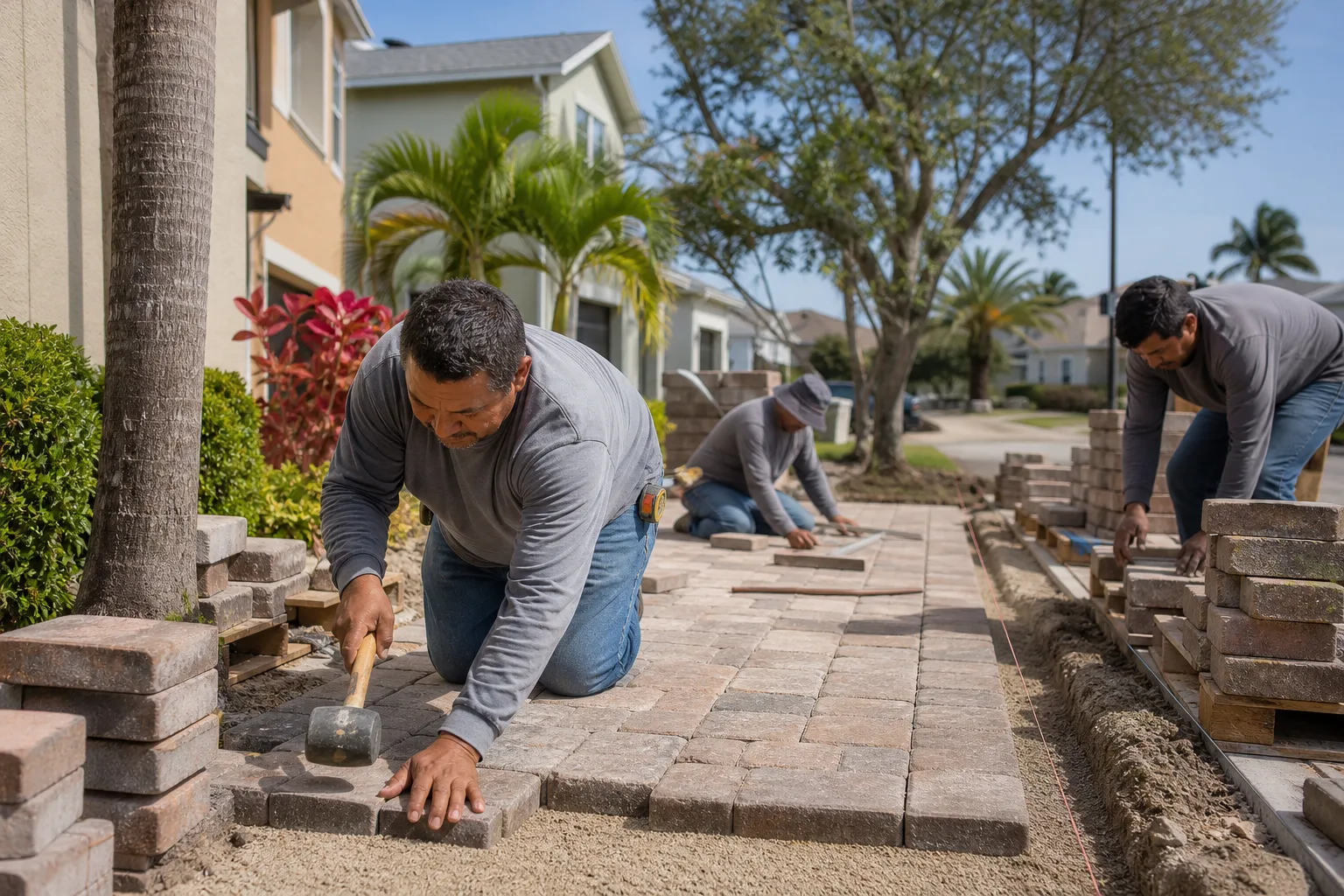
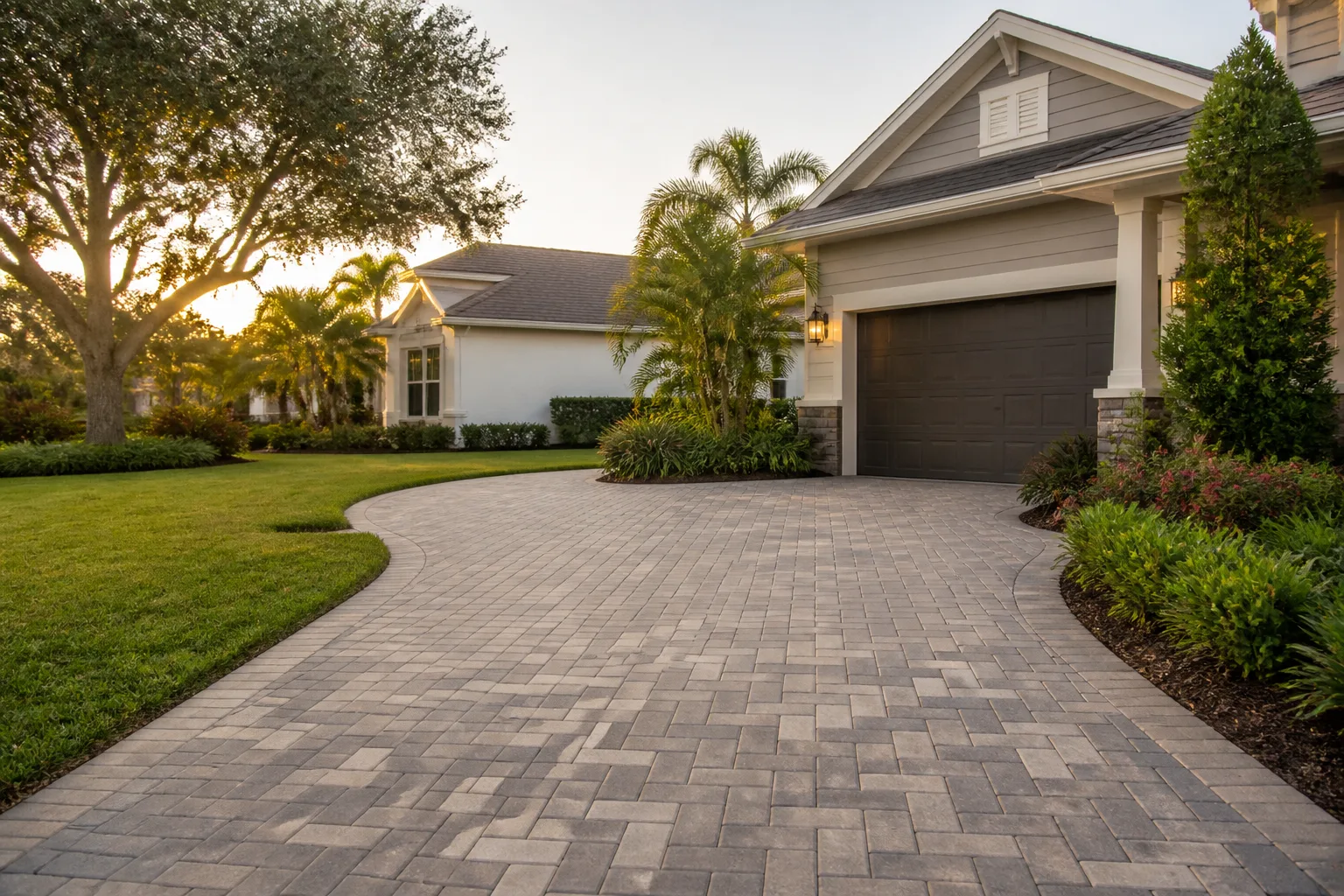
The DIY vs professional driveway decision comes down to one honest split. Maintenance tasks – cleaning, joint sand, edge-paver touch-ups, sealing – are genuinely safe for you to handle, and they protect your investment. Base excavation, grading, and compaction are the line you shouldn’t cross, because that’s where 5-year driveways are born and where manufacturer warranties and insurance coverage get put at risk. The hybrid approach gets you the savings without the risk: prep the site yourself, hand the technical work to pros who pull permits and stand behind the result. If you’re planning a paver driveway in Carrollton, start with a free estimate and real numbers.
Ready to see what a properly built driveway actually costs? Reach out to Groundwork Construction Co. of Carrollton for a free project estimate and design consult. We answer calls with a live person 24/7, bring the schedule and the price in writing, and finish with the 730-Day Done Right Promise. Call (844) 560-0925 today – the number you see is the number you pay, and the first estimate is free.
Written by the team at Groundwork Construction Co. of Carrollton.