Last updated November 18, 2026


Free written scope consultation - allowances, timeline, and change-order rules on paper before a single trade is scheduled
Fence Installation Warning Signs Every Homeowner Should Know
A fence post set without concrete isn’t a fence – it’s a countdown clock. And it’s more common than any contractor wants to admit. We’ve walked Carrollton properties where a two-year-old cedar privacy fence already leans six inches at the corner, because whoever built it backfilled the post holes with loose soil and called it a day. The homeowner never saw the problem coming, and by the time the panels started to gap, the installer’s number had been disconnected. This guide is what we wish every homeowner knew before signing anything. You’ll learn the warning signs to catch before installation, during the build, and after the crew pulls away – the specific, physical checks you can run yourself without a tape measure or a contractor’s license.
Quick Answer
The biggest fence installation warning signs are no fence permit pulled for anything over 6 feet, no 811 utility locate call before digging, posts set in dry-pack instead of wet concrete, inconsistent post depth, untreated lumber in ground contact, zinc-plated hardware where hot-dip galvanized is required, and panels that flex under hand pressure after the job is done. Any one of these points to work that will fail early in North Texas heat and clay soil – catching them before the final walkthrough is what keeps your investment standing past the five-year mark.
Styles & brands we work with
- Kitchen remodeling
- Bathroom remodeling
- Home additions & ADU
- Roofing
- Windows & doors
- Driveway & pavers
- Fence
Table of Contents
- Pre-Installation Warning Signs: The Red Flags Before the First Post Goes In
- During-Installation Warning Signs: What You Should See Happening on Your Property
- Material Warning Signs: Cheap Lumber and the Wrong Hardware
- Post-Job Warning Signs: The Failures That Show Up Weeks Later
- Three Checks You Can Run Yourself Without Any Tools
- Why These Warning Signs Matter More in Carrollton, Texas
- Common Mistakes to Avoid
- When to Call a Professional
- Frequently Asked Questions
- The Bottom Line
Pre-Installation Warning Signs: The Red Flags Before the First Post Goes In
Nine out of ten fence failures we’re called out to inspect in Carrollton were already doomed before the first post hit the ground. The problems start at the bid stage, not the build stage. If a fence contractor skips any of these steps in the first meeting, you’ve found the warning sign that matters most.
Here’s what a legitimate pre-installation process should include, in order:
- A fence permit. Fences over 6 feet tall in most North Texas municipalities require a permit, and the process forces the contractor to submit plan drawings and pass an inspection. If you’re paying for a 7-foot privacy fence and nobody’s talking about a permit, they’re either cutting corners or building cheaper than the contract states. The City of Carrollton’s building services handles residential fence permits, and a legitimate crew files for them as standard practice.
- An 811 utility locate call. Texas law requires anyone excavating to call Texas811 at least two working days before digging. It’s free. There’s no excuse to skip it. If your installer’s truck shows up and the ground has no paint markings or flags, ask why – because there’s a gas main or sprinkler line somewhere under your yard that could turn a fence build into an emergency.
- A site survey to confirm property lines. This is the one homeowners underrate most. Fence contractors who “eyeball” the property line risk building your fence two feet onto a neighbor’s lot, and the cost of moving it falls on you. A proper survey, or at minimum a comparison against your plat, prevents the neighbor dispute that ends more fence projects than any structural flaw.
- A written line-item quote. Not a lump sum on the back of a business card. You should see the linear footage, post count, post spacing, concrete spec, lumber grade, hardware spec, and gate hardware broken out separately.
When we quote Fence Installation in Carrollton, that level of documentation is standard. When it isn’t, ask for it in writing. A contractor who won’t put the specs on paper is telling you something without saying a word.
During-Installation Warning Signs: What You Should See Happening on Your Property
The build itself is where sloppy work can hide in plain sight. Walk outside during the install – you don’t need to hover, but a couple of checks mid-day will catch the most expensive problems.
Posts set in dry-pack instead of wet concrete
This is the failure that matters most. A dry-pack post is set into a layer of dry concrete mix poured into the hole with a splash of water on top. It feels solid for the first few weeks, then the powder never fully hydrates, the post works loose in the first heavy clay-soil season, and you’ve got a leaning fence. Wet concrete – mixed before it goes in the hole – cures evenly and grips the post permanently. If you see a crew pouring dry powder into a hole, stop the job.
Inconsistent post depth
Texas building standards set minimum post depth based on fence height, and the general rule of thumb is that the buried portion of the post should be about one-third of the total post above grade. A 6-foot fence needs posts buried roughly 24 to 30 inches below grade, into soil that’s below the frost-free depth for the region. When the crew holes an 18-inch hole for one post and a 30-inch hole for the next, the fence will heave unevenly and the top rail will wave. You can spot this visually: the exposed post height should be identical all the way around the property. If it isn’t, someone guessed instead of measuring.
No string line used for alignment
Every professionally built fence has a taut string stretching from corner to corner, eyeballed against every post in between. If you don’t see a string line and a level at the post-setting stage, the fence is being eyeballed, and you’ll be able to see every wobble from the street.
Other in-progress signs worth watching
- Posts being set into holes that are too narrow for the concrete to encase the post (a 10-inch hole for a 4×4 post is right; a 6-inch hole leaves no room for concrete).
- Fastener placement with visible splits in the wood or screws driven at odd angles to “make it grab.”
- A crew that never measures between panels with a consistent gap – panels should have uniform spacing for air movement and expansion.
- Gate posts set to the same spec as line posts. Gate posts carry twice the load and need larger posts and deeper footings, or the gate will sag within a season.
Our technicians – who bring up to 12 years of experience to each install – treat these checks as non-negotiable, not optional. A crew that treats them as optional is a crew that won’t be around when the fence leans.
Material Warning Signs: Cheap Lumber and the Wrong Hardware
Every fence contract has a materials spec, and every spec has a shortcut. These are the ones that cost you real money.
Untreated lumber in ground-contact posts
Ground contact is exactly what it sounds like: any wood that touches soil. Ground-contact-rated lumber is treated to a heavier standard (typically labeled “ground contact” or rated for soil exposure) so it can handle constant moisture. Untreated or above-ground-rated lumber shoved into a post hole will rot from the bottom up within three to five years in Texas clay soil. Ask to see the lumber stamp – the end of the board or the side should show the treatment rating.
Zinc-plated hardware instead of hot-dip galvanized
All fence hardware rusts eventually. The question is how fast. Zinc-plated screws, brackets, and hinges are coated with a thin layer of zinc that fails within a year or two in the humidity Carrollton gets. Hot-dip galvanized hardware has a much thicker zinc coating applied at high temperature and will outlast the lumber. Look at the hardware bin before the crew starts driving. If the box says “zinc plated” instead of “hot dipped galvanized,” ask them to swap – and if the contract doesn’t specify, that’s a warning sign all by itself.
Fill material
A surprising amount of lumber sold as “4×4 post” is actually a nominal 4×4 – or worse, a 4×4 that’s been planed down at the mill. Ground-contact lumber should be the full dimension. If you can wrap your hand around more than a third of the post, you’re looking at a thinner board than the spec calls for. And “cedar” on a quote should mean the species, not a cedar-tinted stain on pine.
Brand matters more than you think
Top-tier material manufacturers build to tighter tolerances, and they back it up in writing. That’s why we work with partners like Boral for composite and James Hardie for hardscape-adjacent products – quality you can specify by name and hold a supplier to. And when the materials are right, we back the work with our 730-Day Done Right Promise – if it’s not done right, we make it right.
Post-Job Warning Signs: The Failures That Show Up Weeks Later
The final walkthrough is where a well-built fence should feel like a wall and a poorly built one should give itself away. Run these checks before you sign the completion form.
Panels that flex under hand pressure
Push on the center of a finished panel with one hand – firm pressure, not a shove. A properly built fence panel moves less than an inch. If it moves more, the rails are too small, the posts are too shallow, or the posts are loose in their concrete. Flex is the first visible symptom of every structural problem below the dirt.
Gates that don’t self-close or latch without lifting
Open the gate to 45 degrees, release it, and watch. A well-hung gate swings back to center and latches with a touch. If you have to lift it to close it, the gate post has settled or the hinge hardware is undersized. A gate that doesn’t self-latch is a gate that will be hanging open within six months.
Ground-gap problems
The gap between the bottom of the fence and the ground should be small enough that a rabbit can’t easily get under (roughly 2 inches on uneven ground) but big enough that the wood isn’t sitting in soil. A fence built flush to the ground traps moisture on the bottom rail and rots it out. A fence floating too high leaves a gap that defeats the point of a privacy fence.
Other post-job signs
- Posts that are visibly out of plumb. Hold a level against any post; even a 1/8-inch lean over 6 feet looks sloppy at twenty feet distance.
- Fastener heads that aren’t flush. Screws standing proud of the wood pickle moisture and rust faster.
- Stain applied wet over wet pressure-treated lumber. It looks great for a month, then cracks and peels because the wood was still curing when it was sealed. Premium installers wait the appropriate cure period before staining.
- No written warranty. Our installs are covered by the 730-Day Done Right Promise, and you should receive that in writing. If you walk away from a fence job without a documented warranty, you’re walking away with nothing.
Three Checks You Can Run Yourself Without Any Tools
You don’t need a tape measure, a level, or a torque wrench to spot most fence installation problems. Use these three checks throughout the process – at the start, mid-build, and after completion.
- The push test. Stand at the center of a panel between two posts and push firmly with your palm. The panel should feel solid, like pushing on a wall. If it bows more than an inch, the rails, posts, or footings are underspec. Repeat at every panel – one weak panel is a warning sign of a systemic problem, even if the rest feel fine.
- The line of sight check. Stand at one corner of the fence and look straight down the panels toward the opposite corner. The top edge of the fence should be a straight line, and the panel edges should be aligned. Any wobble, wave, or dip means the posts were set to inconsistent depths or without a string line. Do the same check for the bottom rail.
- The ground-gap inspection. Walk the full fence line and look at where the bottom rail meets the ground. You want a consistent, small gap – usually about 2 inches – from corner to corner. A gap that changes dramatically from one section to the next means the ground was never properly prepped or the panels were set on an uneven profile without adjusting.
Ten minutes with these three checks, run at the right moments, will catch almost every installation problem we see on the properties we’re called to fix. Though there’s one we can’t help you with from the curb: a post that’s already leaning because someone buried it in dry-pack. That problem only shows up six months later, and by then your only option is a rebuild.
Why These Warning Signs Matter More in Carrollton, Texas
Every market has a failure pattern. In Carrollton, the pattern is specific enough to name.
Clay soil movement. The expansive clay soil across North Texas – it runs under most of Carrollton, from the older neighborhoods near Downtown Carrollton to the newer developments out toward the north side of the city – expands when wet and contracts when dry. A post set into a generously large concrete footing that extends below the active soil layer stays put. A post set into a small hole with dry-pack mix, or bolted to a metal spike without enough embedment, works loose within a couple of seasonal shifts. That’s why post depth and footing size aren’t optional details in Carrollton – they’re the whole ballgame.
Summer heat and winter freezes. Dallas-area summers push surface temperatures on untreated wood past 140°F, which accelerates stain failure and dries out under-thick lumber. Winters bring occasional hard freezes that push shallow footings upward. A fence built for a mild climate fails early here.
Wind exposure. Carrollton’s open subdivisions and the corridor along the President George Bush Turnpike catch straight-line wind that funnels through property lines. A fence built with undersized posts and no string line will lean after the first spring storm. A fence with proper footings and hardware holds.
Permit enforcement. The City of Carrollton actively enforces fence permits for anything over 6 feet tall, and fence height restrictions front and back of the property differ. If your contractor doesn’t know the local code, they’re not a legitimate local contractor. The question “did you pull the permit?” is the fastest way to separate a Carrollton fence pro from a truck driving in from two counties over.
When we handle Fence Installation in Carrollton, we build for the soil and the season, because we’ve seen what happens when a crew builds for a climate that isn’t this one.
Common Mistakes to Avoid
- Skipping the permit to save time. We’ve seen this on dozens of Carrollton jobs – a homeowner wants a fence faster and a contractor offers to skip the permit for cash. That fence will fail a future home inspection and cost more to bring up to code than the permit would have cost in the first place.
- Trusting the verbal price. A handshake quote that changes on install day is the oldest trick in the trade. Get every spec line-item in writing – lumber grade, post depth, concrete spec, hardware spec, and warranty. “No-hassle upfront pricing” means the number you see is the number you pay, not a starting offer.
- Letting the crew start without an 811 call. Free, fast, and legally required. If your contractor skipped it, you’ve got a crew that will cut corners everywhere else too.
- Building flush to the ground to look tidy. A bottom rail in contact with soil rots from the ground up regardless of how much stain it’s wearing. The 2-inch gap is there for a reason.
- Hiring the “cheaper” bid without comparing specs. A quote feels different from a spec. When one contractor quotes $52 per linear foot and another quotes $38, the difference is almost always in the concrete, the hardware, or the lumber grade. The $38 bid usually costs more over ten years.
- Ignoring the gate in the walkthrough. Gates take the highest stress of any fence element. If the gate on your new fence doesn’t self-latch smoothly the day it’s installed, it will sag and fail within a season.
- Accepting a verbal warranty. A warranty that lives only in a handshake dies when the contractor’s truck leaves. Get it in writing, with terms you can read before you write a check.
We see the aftermath of these exact mistakes in Carrollton every month. A fence can be fixed – but it’s a lot easier to catch the warning signs on the front end than to rebuild the fence two years later.
When to Call a Professional
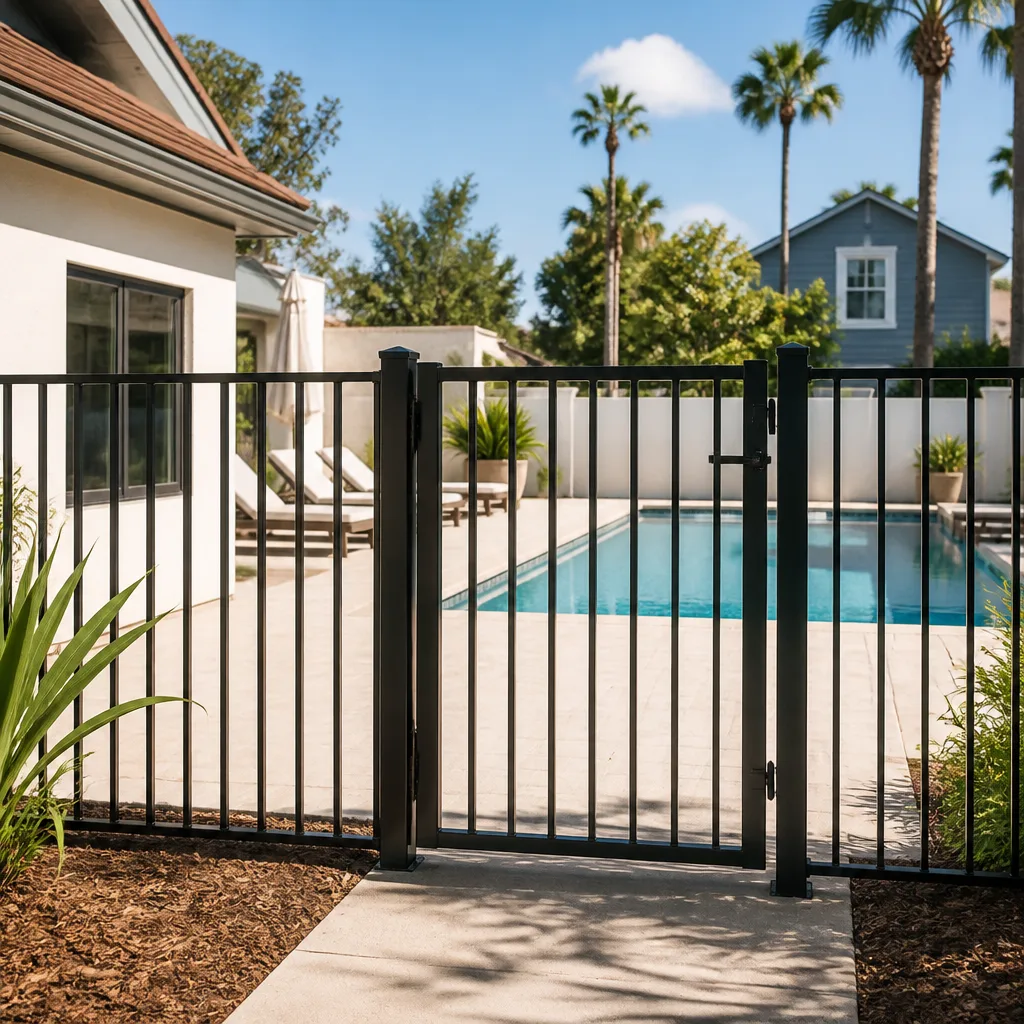
Some of these checks are ones every homeowner can run. But there are clear situations where the right move is to bring in a licensed, insured professional before any money changes hands – and definitely before any digging.
Call a professional fence contractor if: the job requires a permit, any utility lines run near the fence line (or you simply don’t know), the fence is a boundary fence between properties with disputed property lines, the install involves any gate wider than 4 feet or a drive gate, the fence will sit on clay soil with significant slope, the install is part of a larger exterior project like a paver patio or driveway replacement (see our Driveway & Pavers in Carrollton service for how those typically pair), or you’re upgrading a fence as part of a home addition or ADU project – our Home Additions & ADU in Carrollton team handles the fence tie-ins that come with those builds.
Groundwork Construction Co. of Carrollton offers free estimates in Carrollton – call (844) 560-0925 to schedule yours. Our crew is licensed and insured, our technicians are background-checked and uniformed, and every install is backed by the 730-Day Done Right Promise. Calls are answered 24/7 by a live person, so you’re never stuck in a voicemail waiting on a callback.
Frequently Asked Questions
Fence installation in Carrollton runs roughly $35 to $65 per linear foot depending on material and spec – a 150-foot wood privacy fence sits in the $5,500 to $8,500 range, while composite and steel panels land closer to $60 to $90 per linear foot. The biggest swing factors are post depth, concrete spec, and gate count. Call (844) 560-0925 for an exact quote on your fence line – estimates are free and no-hassle upfront.
Not on a professionally bid job. The number you sign is the number you pay – no change orders for materials or labor that a contractor should have anticipated. Where prices change is when a contractor doesn’t do the pre-installation work (site survey, 811, permit) and discovers a complication mid-build. You want to hear “the number is the number” from your contractor, in writing, before the crew arrives. Call (844) 560-0925 for a fixed, line-item estimate.
Yes. Any fence over 6 feet tall in Carrollton requires a permit, and a legitimate contractor handles that permit as part of the job. You should never be the one standing in line at the City of Carrollton’s building services office. If your contractor isn’t pulling the permit, that’s a warning sign that the fence won’t pass a future inspection. Call (844) 560-0925 to talk through the permit and inspection process for your specific fence.
You can check post depth indirectly with the ground-gap inspection and the line-of-sight check, but the definitive answer comes from asking before the concrete is poured. Posts should be buried to roughly one-third of their total length, in wet concrete mixed before pouring, not dry-pack. Any contractor who can’t answer those specs clearly is a warning sign. Call (844) 560-0925 if you want a second opinion on an existing fence.
A properly built wood privacy fence in Carrollton lasts 12 to 18 years, depending on stain maintenance and soil conditions. A fence built with dry-pack posts, untreated ground-contact lumber, or zinc-plated hardware often fails at 4 to 6 years. The difference is almost entirely in the build spec, not the lumber brand. Call (844) 560-0925 to price a fence built to last.
A leaning fence can sometimes be salvaged by sister-posting the weak sections, but in clay soil, once a post has started to move it usually needs replacement. That’s why catching the warning signs before installation is so much less expensive than fixing them after. If you’re looking at a leaning fence today, call (844) 560-0925 and we’ll tell you honestly whether it’s repairable or a rebuild – no pressure either way.
The Bottom Line
Bad fence work doesn’t announce itself. It looks fine on the day of installation and starts failing a season later – and by then, the posts are set and the installer is gone. The warning signs in this guide are the ones you can catch, at each stage of the project: no permit before the first post, no 811 call before the first dig, dry-pack concrete instead of wet, inconsistent post depth, untreated lumber in ground contact, zinc-plated hardware in place of hot-dip galvanized, panels that flex under hand pressure, and gates that don’t self-latch. Every one of them is a rebuild waiting to happen. Carrollton homeowners who check these warning signs early – and who insist on a written spec before signing – will still be walking past a straight, solid fence a decade from now.
That’s the standard we build to at Groundwork Construction Co. of Carrollton. We back every install with the 730-Day Done Right Promise, because a fence that isn’t backed in writing isn’t backed at all. And when you need to bring in the rest of the exterior – a new driveway, an ADU, a paver patio – we handle those with the same one-contractor convenience from foundation to finish line.
Call (844) 560-0925 for a free estimate. Live person, 24/7. No voicemail black holes. No surprise pricing on install day.
Written by the team at Groundwork Construction Co. of Carrollton.
See the difference
 Before
 After
 Before
 After
 Before
 After